The Problems Of Philosophy
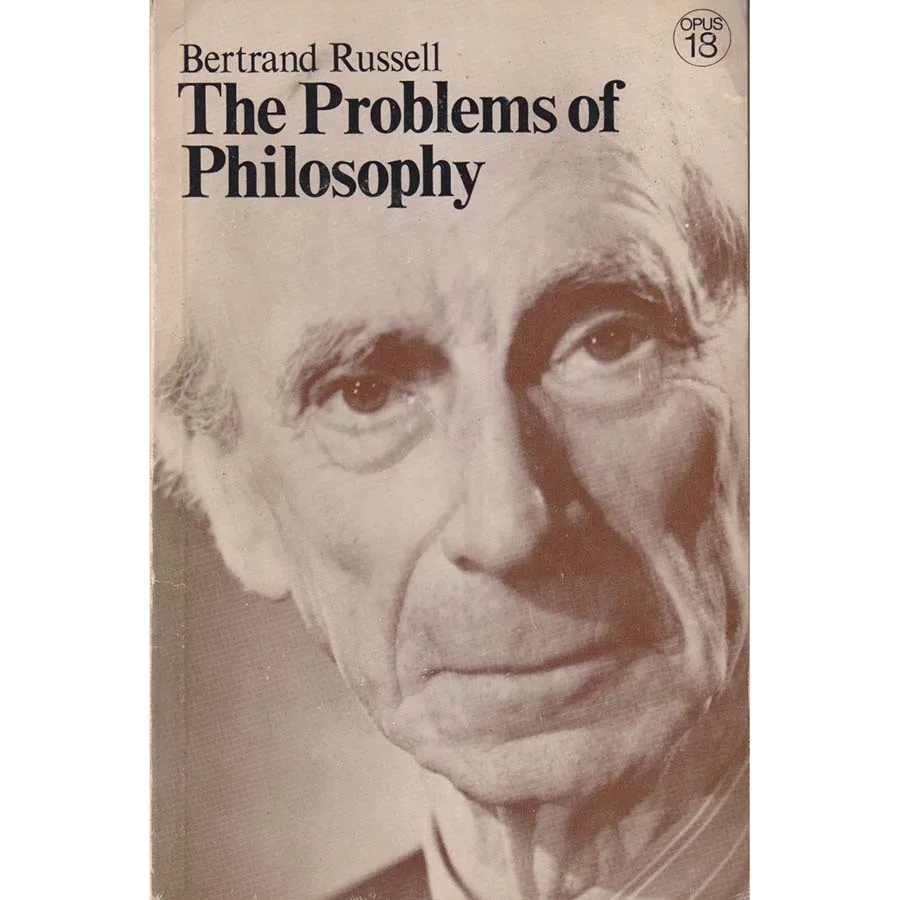
Publisher: Oxford University Press
Format: Paperback
ISBN: 0198880189
Most people are perfectly content to believe that the table in front of them exists, that the world continues when they leave the room, and that the objects surrounding them are more or less what they appear to be. Bertrand Russell, unfortunately, was not most people. Present him with a perfectly ordinary table and he would immediately begin questioning its existence, the reliability of our senses and whether anyone could genuinely claim to know anything about it.
The Problems of Philosophy (1974), published by Oxford University Press, is Russell’s celebrated introduction to some of the most fundamental questions in human thought. Originally published in 1912, it remains an entertaining and surprisingly accessible exploration of knowledge, reality, truth and the unsettling possibility that almost everything we take for granted rests upon assumptions nobody has adequately examined.
Russell begins by asking how we can distinguish appearance from reality. Can we know that physical objects exist independently of our perceptions? What constitutes genuine knowledge? How can we justify beliefs about things we have never experienced? And if philosophers have spent thousands of years investigating such matters, why do we still seem remarkably uncertain about the answers?
Along the way, Russell explores scepticism, idealism, induction, universals and the relationship between knowledge and experience. His arguments introduce some of philosophy’s greatest intellectual puzzles without requiring the reader to acquire a university degree, an expensive tweed jacket or the habit of staring thoughtfully into the middle distance.
Unlike certain philosophers who appear to consider obscurity a professional achievement, Russell writes with admirable clarity and precision. He does not promise to resolve every mystery of existence, but demonstrates why questioning the apparently obvious can be both intellectually rewarding and occasionally rather inconvenient.
This particular copy has acquired a fascinating little history of its own. It includes some newspaper cuttings and a presentation certificate, suggesting that a previous owner took more than a passing interest in the subject. These additions lend the volume a personal character, transforming it from an ordinary second-hand philosophy book into something with a small documentary history attached.
Condition: Fair. This 1974 edition shows signs of age and use, and importantly, the binding is delicate and should be handled carefully. It is therefore better suited to a thoughtful reader prepared to treat an older book gently than someone inclined to bend paperbacks backwards while reading in the bath. The binding has clearly spent some time contemplating the fragility of physical existence, although it would be preferable not to put its conclusions to the test.
The newspaper cuttings and presentation certificate remain included, adding an intriguing dimension to a volume already concerned with the nature of evidence, knowledge and human experience.
Offered by Crappy Old Books, where we are reasonably confident that this book exists, despite Russell’s best efforts to make certainty difficult. Its philosophical arguments remain substantial, even if its binding is feeling rather less secure about the whole business. A suitably thought-provoking survivor for anyone who appreciates old books, intellectual curiosity and the occasional existential crisis.
Keep browsing: See more Academic books Other books by Bertrand Russell